
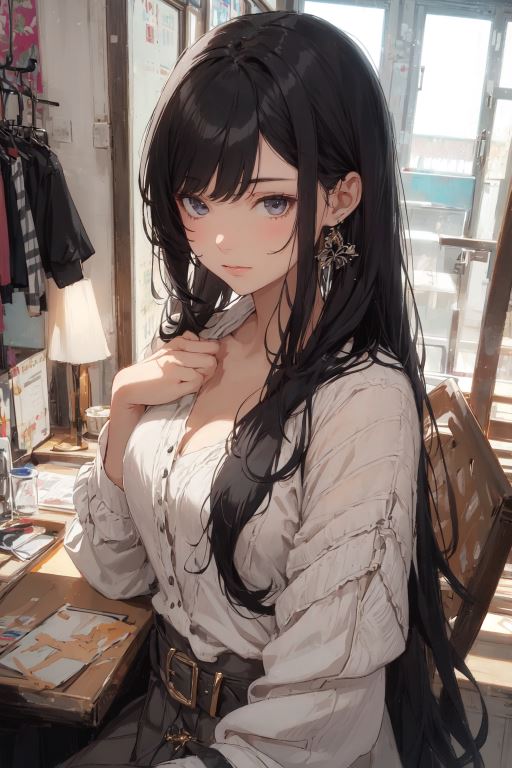
Hey, why aren’t you coming to see me today? Hey, why?
Itsuki Someya fell head over heels for his senior, Himeno Touka, who is one year older than him.. and is was known as the Ice Queen, and he confessed his love to her every day, only to be met with cold rejection each time.
However, from the day he couldn’t meet her by chance, his senior’s attitude began to change…
Introducing a cool yandere heroine.

Popular Reviews
[Note: This may contain minor spoilers for Saint Seiya and The Lost Canvas]
Firstly, considering the story, there isn't much to commend. It's largely an expansion of the Hades Arc from the original but far less engaging due to prequel syndrome, which makes it obvious who will live and die. Even here, it falters; the original manga states that Dohko and Shion were the sole survivors of the war, yet in The Lost Canvas, there are many more survivors, making it not only redundant but inconsistent with the original.
The primary draw for some is the art, deemed better than the original, a view I contest. Kurumada's art style uniquely blended bishonen elements with strong masculine traits and intricately detailed armor for each character. In contrast, Teshirogi's art lacks distinctive traits, resulting in characters with generic faces and less detailed clothing.
The series stands out mainly due to its characters, though not positively. Tenma, Athena, and Hades are the central figures but lack depth compared to their classic counterparts. Supporting characters like Yato and Yuzuriha are quickly sidelined, unlike Shaina and Marin in the original who remain relevant throughout. The Gold Saints are remembered but are pale versions of their 20th Century equivalents. Exceptions include Albafica's toxic blood and Manigoldo's honor, contrasting with Deathmask's original characterization, yet these exceptions render the ensemble bland due to the absence of chaotic elements that distinguished earlier members. Moreover, Regulus ranks among the franchise's most egregious Gary Stus, ascending rapidly from below-average Gold Saint to god-tier status merely through natural attunement to his opponent.
Regarding overpowered characters and Gary Stus, consider Tenma. We're repeatedly told he's destined to defeat Hades, the sole capable character for this task. This contradicts the original series where using God Cloths or a Pegasus Saint battling Hades seemed archaic. Unlike Seiya, whose unremarkable lineage was overshadowed by his repeated demonstrations of resilience against Gold Saints and gods, Tenma's abilities are rushed into existence late in the manga after revelations about his parents' special lineages. This makes Seiya a far more compelling protagonist.
While it attempts to make villains more sympathetic and developed than their original counterparts, it falls short of creating genuine connections. Garuda Suikyo in the canonical continuation, Next Dimension, achieves this far better.
In conclusion, The Lost Canvas is overrated and underperforms compared to the original series in nearly every aspect. I cannot recommend it and instead suggest reading the original Saint Seiya manga or, for a continuation, the canonical Saint Seiya: Next Dimension.
Story - 3/10
Art - 5/10
Characters - 3/10
Enjoyment - 3/10
Overall - 3.5/10
I felt that Saint Seiya often lacked sufficient fighting intensity and that everyone was overly balanced, but that's not the case here. The true power levels of Athena's mighty Gold Saints are fully unleashed, and all characters—both heroes and villains—are exceptional. The battles continue nonstop right up to the climax.
I can't wait to dive into other Saint Seiya spin-offs; anything as great as this is sure to be exciting.
One of the best mangas I've read in years.
10/10
DarkMaxUchiha
Story (5):
"Saint Seiya: The Lost Canvas" primarily revolves around the battle against Hades in the 18th century. The narrative centers on three main characters who grew up as friends in an orphanage: Tenma, who becomes one of Athena's Saints; Sasha, the reincarnation of Athena; and Alone, who turns out to be the reincarnation of Hades. Fate cruelly places Alone as the enemy of Tenma and Sasha.
While the story isn't bad, its length of 223 chapters focusing on a single war makes it feel unnecessarily drawn out, especially arcs like "Bluegrad," "Ship of Hope," and the subplot involving the secondary god Kairos. For comparison, the original "Saint Seiya" manga covered a civil war against the Pope, a war against Poseidon, and a war against Hades in just 110 chapters.
The philosophical discussions about death between Pope Sage and Cancer Manigoldo come across as pretentious, akin to saying, "Dude, death happens to everyone even without war, so get over it." The angst-filled arc with Sagittarius Sisyphus is also irritating because he feels guilty for something that wasn't his fault—bringing Athena from an orphanage to Sanctuary, which later leads to her conflict with Alone. This guilt seems misplaced, as a Saint should prioritize humanity's safety over personal feelings.
Additionally, many scenes are copied from the original "Saint Seiya," making it seem like the mangaka ran out of original ideas. Examples include:
- The "Bluegrad" arc feeling like a mix of the "Poseidon" arc and the anime-only "Asgard" arc. Unity resembles both Isaac and Marine General Perseus, and the rivalry between Aquarius Degel and Sea Dragon Unity mirrors Hyoga and Isaac's relationship.
- Sagittarius Sisyphus sacrificing his eyesight to defeat Garuda Aiacos, similar to Dragon Shiryu versus Perseus Algol.
- The Gemini Saint being a traitor aligned with Hades, echoing the original series' Gemini Saga.
- Libra Dohko's battle against Bennu Kagaho resembling Dragon Shiryu versus Capricorn Shura.
- Souls of dead Gold Saints returning for a group attack.
There are also noticeable plot holes:
- Why does Gemini Defteros have Athena's blood? It’s never explained. If the Pope knew how Athena's Cloth would form, why didn't he tell Sasha at the start of the war?
- How does Libra Dohko's blood revive Athena's Cloth when it mixes impure mortal blood with divine blood?
- During Pegasus Tenma's fight with Morpheus, his Cloth inexplicably transforms into a God Cloth despite needing divine blood in the original series.
- Why does Athena's reincarnation appear in Italy instead of Greece?
Art (8):
Though I'm not personally fond of the art style, I must admit it's technically well-done.
Characters (3):
Pegasus Tenma - Tenma is a clichéd shounen protagonist fighting to protect his friends, made worse by revealing he's the son of the god Kairos and Partita, a messenger of Athena. Despite being called strong and destined to defeat Hades, he frequently gets defeated and requires rescuing by Gold Saints.
Sasha/Athena - She isn’t a bad character but lacks depth, embodying the typical angelic female archetype. Fans claim she’s more active than Saori/Athena from the original, but this is exaggerated. While she helps Sisyphus escape the Dream World and shows gratitude to her Saints, she rarely participates actively in battles.
Alone/Hades - The most intriguing character, Alone's ability to delay Hades' revival and his ultimate goal of bringing salvation through death make him stand out.
Unicorn Yato and Crane Yuzuriha - Initially part of the main team, they’re quickly sidelined, becoming tertiary characters.
The Gold Saints - They have compelling backstories but become repetitive due to their overpowered nature and predictable arcs. Exceptions include Leo Regulus and Sagittarius Sisyphus, who survive longer. Gemini Aspros feels like a cartoon villain, and his redemption arc via Kairos planting an evil seed is contrived. His brother Defteros’ love and sacrifice seem naive.
Pandora - Not much different from her original counterpart except for increased screen time and more revealing outfits.
Thanatos and Hypnos - Praised as improvements, they're actually weaker. In the original, Bronze Saints needed God Clothes to defeat them, yet here they're sealed by Pope Sage and Hakurei. Their abilities are diminished for plot convenience.
Mesophisto Yoma/Kairos - An annoying addition who reveals himself as Tenma's father, taking Hades' vessel from Pandora to ensure Tenma and Alone grow up together, creating a dramatic rivalry. His plan to use Tenma to instigate a war among gods feels forced and unnecessary.
Among other villains, only Bennu Kagaho and Violate Behemoth are noteworthy.
<p>
In Saint Seiya Classic, you've got:
Clichés, generic characters, more clichés, repetition, even more repetition and clichés.
And let’s not forget, a POOR art style.
Here, you get development, great characters, an engaging story, and overall, a fantastic manga.
Plus, an AMAZING art style.
And ALMOST no plot holes—how incredible, huh, Kurumada?
We’ve got great art, development, strong characters, and practically everything that’s missing in the classic—no clichés, no “classic of classics,” no beatings, getting back up, declaring you won’t be defeated by the same move twice, the attack failing against the same knight, then moving on to the next house.
This is DEFINITELY the BEST continuation, no doubt about it.
Not to mention the Gaidens, which enhance the universe even further.
<p>
Lost Canvas serves as a prequel to the original Saint Seiya manga. If you're familiar with the original Saint Seiya series, you pretty much know the entire plot and outcome of Lost Canvas. Let me put this gently... steer clear if you can't handle frequent character deaths! The mortality rate is sky-high!! Aside from that, I imagine the brainstorming session for Lost Canvas went something like this:
Person A: So, what should we focus on here?
Person B: Well, people really seem to love watching the Gold Saints battle it out.
Person C: Yes!!
And just like that, Lost Canvas came to life! Approximately 90% of it revolves around nonstop combat. Relentless, brutal combat, primarily among the Gold Saints. For me, it's pure bliss, but if you crave a more intricate storyline alongside the action, you might feel let down. There is a plot, sure, but it's so linear that it might as well be negligible. You're essentially thrown into the midst of a Holy War, with the narrative advancing through clashes between Hades' Specters and Athena's Saints. It's beautifully chaotic and exhilarating fun!!
The artwork in Lost Canvas surpasses the original Saint Seiya manga in terms of beauty. Tenma and Sasha are far less irritating than Seiya and Saori. Some Gold Saints are better developed in Lost Canvas, while others receive more attention in the original, making it somewhat of a tie there. However, overall, character development feels stronger in the original. Lost Canvas lacks the cohesive, balanced team dynamic present among Seiya, Shiryu, Hyoga, Shun, and Ikki in the original.
I'm joking...or maybe I'm not.
I was always familiar with Saint Seiya, but I had no idea about The Lost Canvas (or any Saint Seiya spin-offs). Honestly, I don't recall how I stumbled upon this manga or what made me want to dive into it, but looking back, I'm incredibly glad I did.
Side note: No, you don't have to read the original before diving into this, but at the same time, if you do, you'll appreciate The Lost Canvas so much more.
---
**STORY/PLOT: 9/10**
The plot is straightforward, almost cliché. It's your typical Saint Seiya storyline where a young kid gets possessed by a god—nothing groundbreaking here. However, unlike other Saint Seiya works, this one is far better written, deeper, and more philosophical. Additionally, the battles were spectacular, elevating the story to epic heights.
---
**ART: 10/10**
The artwork? Oh my goodness, it's breathtaking. Probably the best art style I've ever encountered. Seriously, if only more shonen series had shojo-style art, the world would be a far better place—that's for sure. The art improves even further in the later chapters.
---
**CHARACTERS: 10/10**
The characters are undoubtedly the highlight of this manga. They're all delightful, especially the Gold Saints. These versions of the Gold Saints are clearly inspired by their counterparts from the original series but are significantly better developed and richer in depth (keep in mind, this leans heavily toward Gold Saint focus, so they get more attention than the main characters). The same applies to the antagonists, the Specters.
The protagonist, Tenma, isn't bad. He fits the mold of a standard shonen hero, but at least he doesn't hog all the glory like most do. Alone, as the villain, is fantastic—he's my favorite character in this story. And Sasha? She's the best Athena in the entire Saint Seiya universe.
---
**ENJOYMENT: 10/10**
The Lost Canvas is both charming and profoundly tragic, leaving an overwhelming impression. My heart burned with anticipation with every page I turned, always curious about what would happen next. The deeper you delve, the better it gets.
I didn't anticipate this beautiful tale affecting me so emotionally. Reading it was a rewarding journey.
---
**OVERALL:**
I know some Saint Seiya fans might disagree with me, but in my opinion, this surpasses any other Saint Seiya work (yes, even the original).
Of course, it's not flawless—it's far from being a masterpiece. There were moments I wasn't entirely fond of, things I'd personally alter. Despite that, it remains an excellent manga, and I thoroughly enjoyed every moment of it.
What did I take away from this? That fate can indeed be cruel. It illustrates that life can sometimes be destined for tragedy, yet there's room for grandeur and noble heroism along the way. Even in death, all hope isn't lost.
But what if it's not that deep, and it's all just in my head? Oh well, sorry for tricking you into reading this far.
So yeah, that's it. This manga is a hidden gem, and I wish more people would give it a chance. I could go on about it forever, but I'll leave it here. Hope you enjoyed my review!
---
Tfw still crying over anime getting canceled
Leave a Review
Part 1. Rate (click Star to vote)
Part 2. Login to account
Part 3. Write your review
Directory of Novels. where you can find Novels
Copyright novel cool © 2018–2024 — All rights reserved